
Kizomba: The Complete Guide to Angola's Romantic Embrace Dance
1. What is Kizomba? (Origins & Cultural Background)
Kizomba originated inAngola,Africa. “Kizomba” means “party” in Kimbundu. Its predecessor is the earlier Angolan traditional dance Semba, an upbeat social dance often danced apart, forming Kizomba's cultural roots.
In the 1980s, Kizomba took shape in Angola by blending Semba with Caribbean Zouk rhythms, emphasizing a close embrace and slow, flowing body movement. Since the 2000s, throughFrench and PortugueseAfrican diaspora communities, it spread to Europe and evolved into the more modern, stage-ready Urban Kiz branch. Today, Kizomba is an essential part of the global social dance scene.
2. Main Styles of Kizomba
在台灣,我們主要可以接觸到五大派別,每一種都有各自獨特的魅力,適合的舞者也不太一樣。
Kizomba
最經典的 Kizomba,跳的時候兩人貼近擁抱,動作圓滑、緩慢流動,情感連結濃厚,很多人第一次被這支舞打動,就是因為那種被完整接住的感覺。跳舞時不用刻意去踩準每一拍,而是跟著音樂的氛圍走,重點在身體重心怎麼轉移、呼吸怎麼跟舞伴同步。如果你喜歡慢一點的節奏,重視身體連結與情感表達,Kizomba 會是很舒服的起點。
Semba
Semba 是 Kizomba 的前身,節奏明快又俏皮,兩人常常會分開跳一些即興的腳步,帶點彈跳感,也更貼近非洲傳統舞蹈的根源。整體速度比 Kizomba 快上不少,跳起來活力十足。喜歡活潑律動、也想追溯 Kizomba 文化起源的舞者,會特別適合這支舞。
Urban Kiz
Urban Kiz 源自歐洲(法國、葡萄牙),是比較現代化的分支,把 Kizomba 的擁抱感跟更俐落的線條、轉圈、舞台效果融合在一起,音樂也多半是改編過的 R&B 或電子 Zouk。跳的時候比傳統 Kizomba 更明確地卡在音樂的重拍上,常常在停頓和爆發力之間做出強烈對比,很適合喜歡俐落線條、視覺效果和現代電子音樂的進階舞者。
Tarraxa
Tarraxa 字尾的「a」在葡萄牙語裡對應陰性,原意是「螺絲與螺栓」,風格外放張揚,強調身體局部的推拉張力,也就是所謂的 isolation。舞步和重心轉換都比較明顯、大開大闔,常常跟 Urban Kiz 搭配著跳,也共用類似 Ghetto Zouk 的音樂,另外也有自己專屬的曲風。喜歡展現身體張力與局部動作技巧、享受視覺效果的舞者,會很喜歡 Tarraxa。
Tarraxo / Tarraxinha
Tarraxo 源自安哥拉,字尾的「o」對應陽性,原意是「小螺絲」。很多人以為 Tarraxinha 是介於 Kizomba 和 Tarraxo 之間的過渡風格,但其實 Tarraxinha 只是 Tarraxo 的別稱,兩者說的是同一件事:比 Kizomba 更慢、更貼近地面、更強調感官與呼吸的舞蹈風格。動作極簡,情感張力卻很濃厚,常被視為 Kizomba 家族裡最原始、最內斂的一支,節奏極慢,甚至可以在幾乎聽不到鼓點時起舞,重視的是身體細微的呼吸與重心轉移,而不是明確的步伐。適合喜歡深度身體連結、慢節奏冥想式律動的舞者。
3. Core Steps & Musicality
Kizomba 的音樂節奏其實沒有想像中複雜,跳舞時真正重要的是身體怎麼跟著音樂的bassline持續流動,而不是精準卡在某一個節拍上。
這裡有幾個常聽到的關鍵詞,也是老師上課會反覆提醒的地方。像是 Cambré,指的是兩人上半身輕輕相貼、建立起穩定的重心與呼吸連結,這是 leading 和 following 的基礎;Saída 則是最基本的移動步伐,靠的是胸口和胯部的重心轉移來帶動整個人往前走,而不是刻意跨出明顯的腳步;至於 Tarraxinha,指的是定點時做出細膩的胯部律動,很考驗身體控制和對音樂的敏感度。
4. Five Benefits of Learning Kizomba
學 Kizomba 除了好玩,其實好處也不少。跳舞時得不斷做重心轉移、穩定身體軸線,久了自然能提升身體協調和核心控制力;擁抱式的舞蹈也很適合拿來認識新朋友,兩人靠得近,很快就能建立起信任感,是建立深度社交連結的好方法。緩慢流動的節奏加上肢體接觸,還能幫助放鬆神經系統,達到紓解壓力、療癒身心的效果。跳久了也會慢慢學會聆聽貝斯線和音樂裡的細節,而不是只跟著主旋律走,音樂敏感度自然而然會提升。最後,Kizomba 在歐洲、非洲到全球各地的社交舞派對裡都是主流之一,學會了以後不管去哪個城市旅行,都能很快融入當地的舞蹈社群。
5. Kizomba Social
Kizomba
Semba
Urban Kiz
Tarraxo / Tarraxinha
6. Pro-Tips for Beginners
上課建議穿著貼身、透氣的衣服,方便老師和舞伴觀察你的身體線條與重心;鞋子則建議選皮底或止滑度適中的款式,比較好在地板上轉動、滑步。
想知道在哪裡學嗎?以下是近期開放報名的 Kizomba 課程:
October 2026
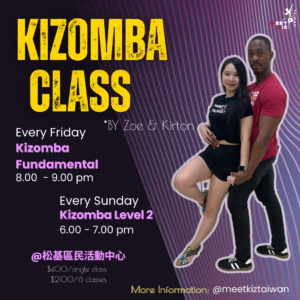
KIZOMBA Level 2 Class
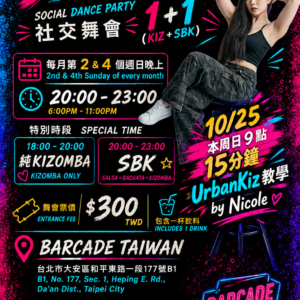
Sunday Kizomba Social 1+1 Party
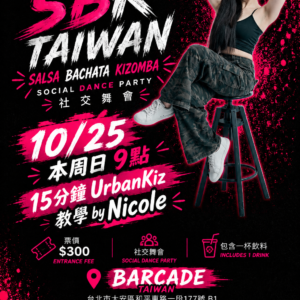
Sunday SBK Night
KIZOMBA Fundamental Class
November 2026
KIZOMBA Level 2 Class
KIZOMBA Fundamental Class
KIZOMBA Level 2 Class
KIZOMBA Fundamental Class
KIZOMBA Level 2 Class
KIZOMBA Fundamental Class
KIZOMBA Level 2 Class